
Wild Horses Approaching—Now What?—An Educational Update
Update as of 7:50pm, Thursday, July 2: The person who recorded the video we are referring to in this post reached out and asked us to remove it due to copyright infringement.
This video was posted on TikTok recently and has gained quite a bit of attention (understandably so). We feel a responsibility to share it and talk about why this was such a dangerous situation, and discuss the consequences that both horses and humans in this scenario could face. We’ve decided to close comments on this post because we don’t want the discourse to distract from the important message.
Our goal here is to educate people about the horses’ behavior, the risk they take when not respecting the horses’ space, and how to be better stewards of this herd. Yes, it’s against the law to approach, touch, or feed the horses. Yes, the area is patrolled by law enforcement. Yes, citations are issued. Enforcement of the wild horse ordinance is an incredibly important component of all this, but regardless of whether or not a citation is issued the damage is already done. We want to stop this kind of behavior before it ever happens, and that’s where education comes in.
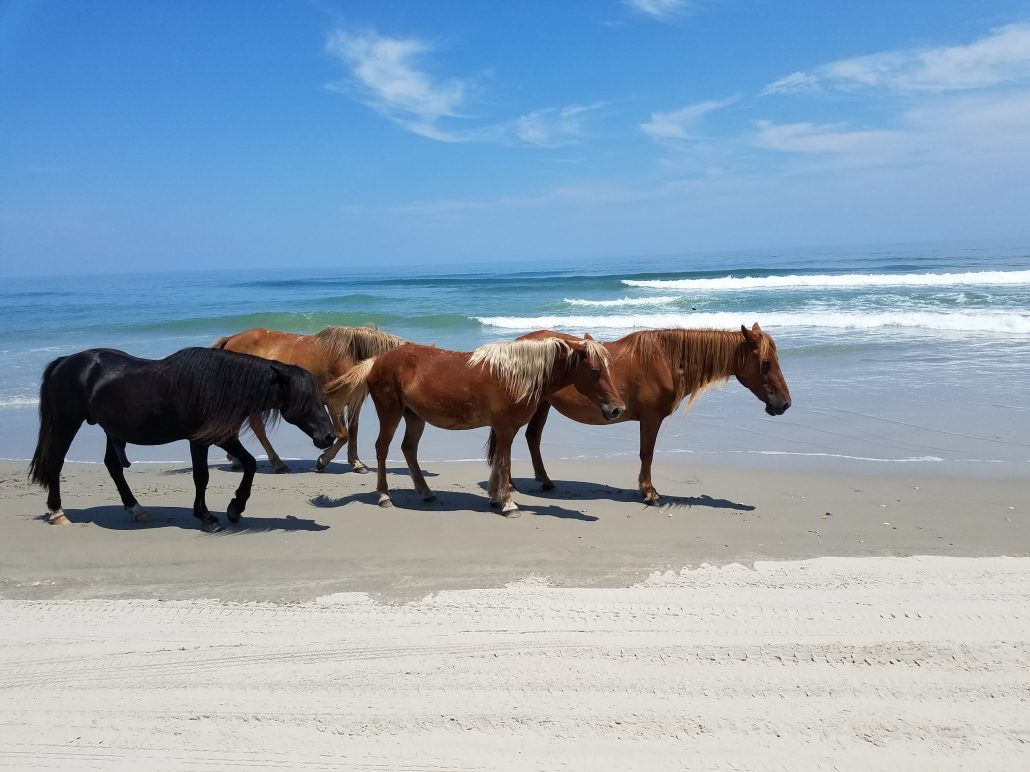
The approximately 115 horses in this herd have close to 8000 acres of habitat to freely roam. It’s an 11-mile stretch of beach, and behind the dunes are thousands acres of marsh, maritime forest, coastal plain, and yes, neighborhoods. There is a growing community of year-round residents but the majority of the houses are second homes and/or vacation rentals. This area sees tens of thousands of visitors each week during the summer, and there are also local daytrippers, tradespeople, property owners and part-time residents, and all kinds of other people who access the area on a daily basis.
Whether you’ve lived here for 30 years or are visiting the area for the very first time, you have a responsibility to follow the rules that are in place to keep you and the horses safe. This isn’t a tourists vs. locals issue; we see good and bad behavior from both sides.
The foal in this video is the great-grandson of the iconic stallion Amadeo. His great-uncle was our beloved Junior. His roots run deep through this land, and our hearts as well. Just as we watched his mom grow up and anticipated the birth of her first foal, we are excited to see what life has in store for him too. He is a precious gift that deserves our utmost respect and protection – they all do.
It’s very important to us that this herd remains accessible. This is the state horse of North Carolina. They are a cultural treasure and they belong to all of us. But that also means that we all have a responsibility to protect them, respect them, and sacrifice our own egos a bit in the interest of the horses’ wellbeing. It is a great privilege that any of us get to spend time around them, and we need to treat it as such.
It’s not a lost cause. The herd is in excellent health and reproducing naturally. They have plenty of habitat available to them that provides food and cover. They can take care of themselves and they do it very well; the biggest challenges they are facing right now are the effects of human encroachment. But as overwhelming as it may feel sometimes, the good news is we have complete and total control over our own actions. This is an easy problem to fix if we all work together to be better protectors of these special horses.
If you see someone engaging in dangerous behavior or putting the horses in harm’s way, please immediately call the county non-emergency number at 252-453-3633. The ordinance can’t be enforced if infractions are not reported to law enforcement.
There are so many people who do go out of their way to be respectful of the horses and that does not go unnoticed! We have an amazing community of locals and visitors here who are fiercely protective of the herd and we absolutely could not do this work without their support. Thank you to every last one of you – it takes a village!
Now let’s get into the video…
The horse that first walks up to the child is a young mare. Her foal was born on May 31 – he is her first. This foal is already displaying signs of habituation. Foals are extremely impressionable and it’s critical that in these first few months of life they do not become too accustomed to humans. This is one of the reasons why we ask people to give them plenty of space and not encourage this kind of behavior.
The lighter colored horse with the white blaze is a young stallion who is just starting to strike out on his own, but still spends most of his time with his mom and whichever mature stallion she’s with. He’s the equivalent of a teenage boy right now; still learning manners, pushing boundaries, and gets pretty stupid around pretty girls. He is also part of the last crop of foals whose names we announced, and he is one of the reasons we’ve stopped sharing names. Because people constantly call him by his name, he will respond to it and even approach vehicles when called. This is extremely dangerous for him as well as people he comes in contact with. It’s something we’re monitoring closely and hoping does not escalate to the point where we have to remove him.
There are other horses in this group too, including the lead stallion who is protective of his mares and foal, and always keeping an eye on the younger stallion and correcting his rude teenage behavior.
These horses can’t teleport. They did not just magically appear on top of these children. They are walking calmly and slowly, and these people were surely aware of their presence long before they were this close. Of *course* we don’t think these parents would purposefully put their kids in a dangerous situation, but the fact of the matter is their lives were legitimately at risk through this entire interaction. It’s not funny or cute.
If you see horses approaching you on the beach, please move away from them. We hear “they came up to us” all the time as if that’s somehow permission to put yourself in harm’s way or harass/habituate the horses. If you choose to live here, visit here, or just spend a few hours here, it means there will sometimes be horses in your space. It is your responsibility to give them room even if that means a few minutes of inconvenience for you. If a horse walks up to you it’s not because you have a special connection with it, it’s because hundreds of other people have contributed to that horse’s habituation. Be the one who breaks that cycle.
In the video, you can see that as the younger stallion approaches, the mare’s ears go back and she moves to push her foal away from him. At any moment she could have decided to kick out at the youngster, spin to bite at him, or strike with her front legs. Those kids are right in the line of fire. Even though the aggression wouldn’t be directed at them, they could still get kicked or trampled. A full-grown stallion was recently kicked in the face so hard that it killed him instantly. It’s very likely the kick came from a mare who wasn’t being overly aggressive, she was simply saying “get away from me.”
Horses use their bodies to communicate; kicking, biting, and throwing their weight around is how they interact with each other, and it’s how they try to communicate with us too. Even a warning kick could be fatal to a human.
We are so glad that no one was hurt and we hope that some of the things we’ve talked about in this post help shed some light on why it’s so important for people to follow the rules and always be aware of their surroundings.
Again, if you witness people and/or horses in dangerous situations, please immediately call the county non-emergency number at 252-453-3633. You aren’t snitching – you may be saving a life in more ways than you can imagine.
